
Why has RF Microneedling suddenly fallen out of favor? What are the alternatives for non-surgical skin tightening?
Recently there has been a barrage of negative press about Radiofrequency (RF) microneedling. Once the darling of skin tightening, suddenly social media is on fire with warnings of bad outcomes. In October 2025, FDA issued a safety communication about RF microneedling potentially causing fat loss. The good news is that XERF, a needle-free approach with dual radiofrequency, offers a no-downtime, less painful option for skin tightening.
Does RF microneedling really cause fat loss?
RF microneedling releases focal radiofrequency heat at the depth of which the needles are programmed to penetrate underneath the skin. Whether or not fat is lost depends on the amount of heat and the depth of the needle penetration. With any aesthetic treatment option, there will be potential associated risk. But that does not mean the risk will occur with 100% of every treatment. A knowledgeable and experienced provider with a good quality RF microneedling device can certainly avoid fat loss, and instead boost collagen - leading to plumper, healthier skin.
At Rejuve Medspa, Dr. Kaplan uses Genius RF microneedling - a device developed in South Korea by a company called Lutronic which later merged with Cyanosure. The Genius RF microneedling device has the distinct advantage of having very tiny/fine needles (49 per stamp) that produces minimal skin surface damage. But the key benefit of Genius RF that makes it superior to other RF microneedling devices, is the level of control and feedback of the needle depth and energy. Feedback about the amount of Joules or heat energy produced with each stamp is provided. The level of hydration of the treated tissue is monitored and warnings are signaled if dehydration is detected. The depth of the needles can be manually programed and tightly controlled in increments of 0.1 mm. Whereas other devices might only allow pre-programed depths of 1.5 mm, 3.0 mm, 4.5 mm, etc. Genius RF can be manually controlled at whatever depth desired - adjustable in increments of 0.1 mm to a maximum depth of 3.5 mm. This allows Dr. Kaplan to avoid fat reduction after clinically assessing each patient’s individual anatomy.
Examples of Genius RF Microneedling improving collagen and facial volume:


Examples of Genius RF microneedling for Acne scars with no loss of fat:


Fat reduction with RF microneedling can be intentional - And that’s a good thing:
There are certain circumstances where fat reduction is desired, in which case RF microneedling can be a useful tool. Areas such as the under chin (submental) region, abdomen, and triceps region of the upper arms are popular sites that patients often seek help for fat reduction. The advantage of using RF microneedling is that it can also help with skin tightening, so patients aren’t left with sagging skin after the fat has been removed. The key is to understand the patient’s anatomy and to be able to control the needle depth and energy levels to achieve successful fat reduction.
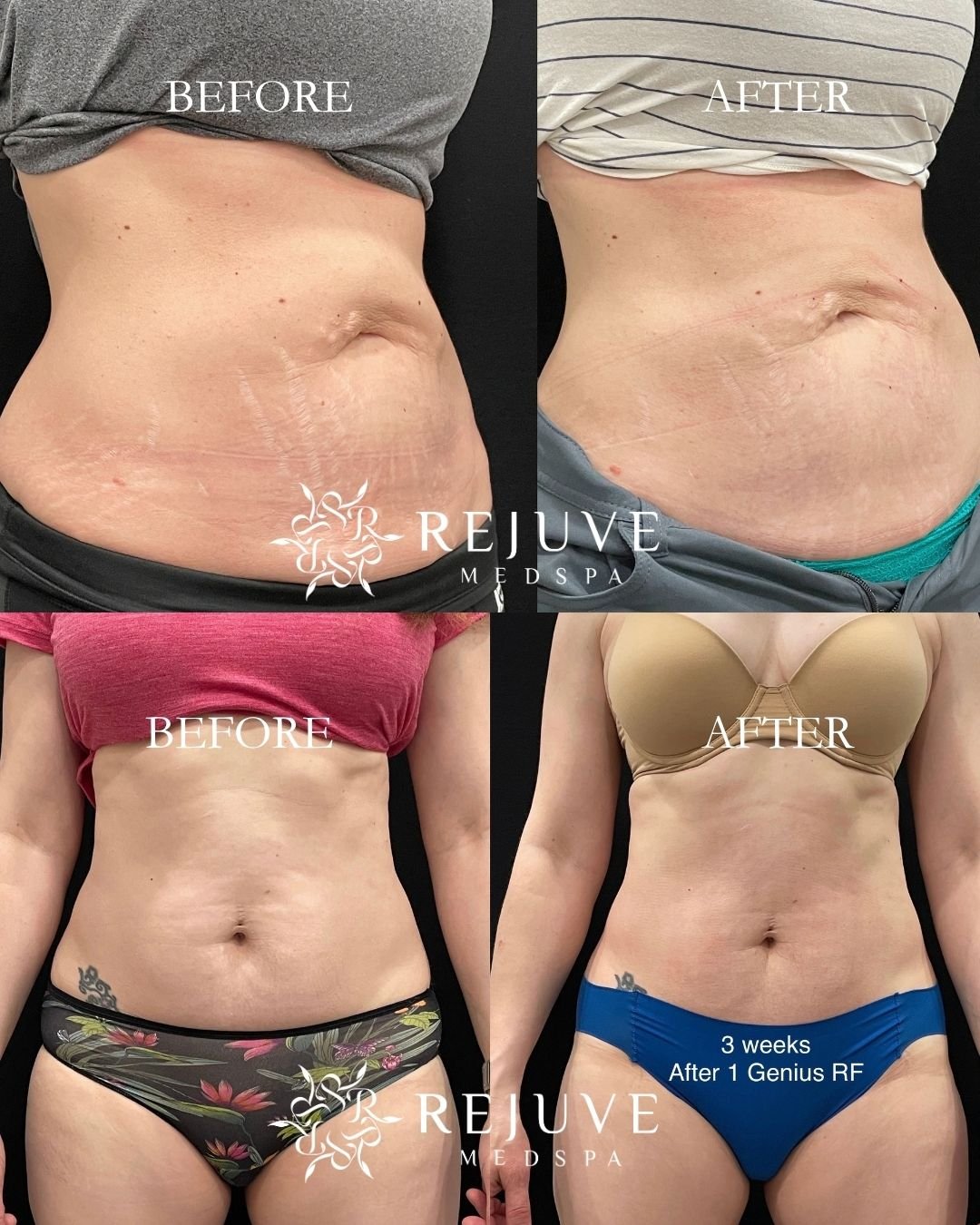
Examples of where fat reduction was desired with RF microneedling:

What are the alternative options to RF microneedling for skin tightening?
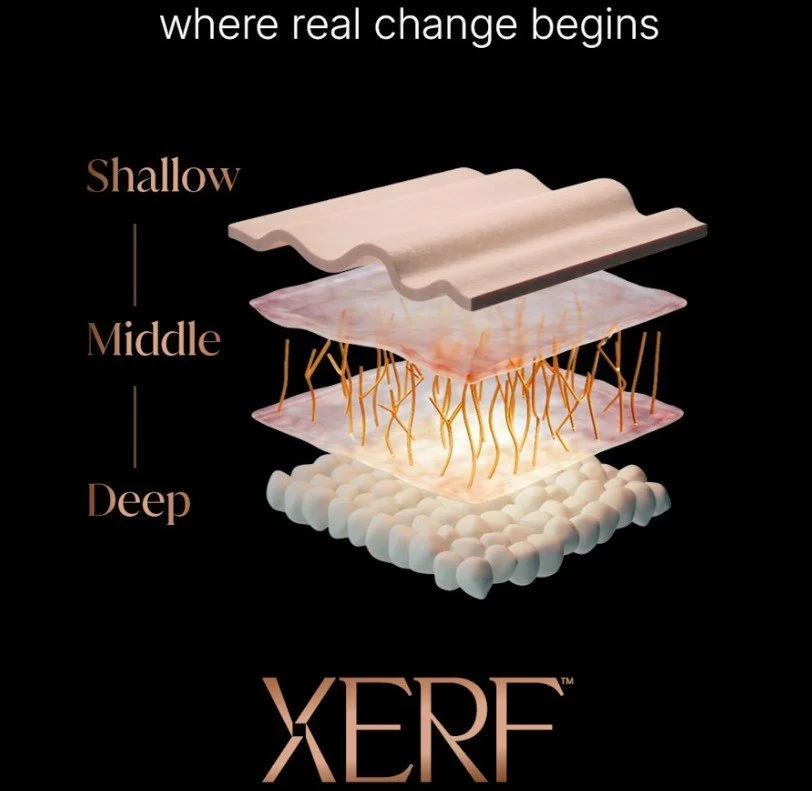
At Rejuve Medspa, XERF has essentially replaced RF microneedling as the most popular treatment for skin tightening. XERF has the advantage of integrating two different Radiofrequencies (6.78 MHz, 2 MHz) without using needles. XERF is able to target the shallow, middle, and deep depths below the skin to boost collagen production. Rather than the focal energy with RF microneedling, XERF relies on bulk heating which is both more efficient and more effective for targeting the retaining ligaments and SMAS (Superficial Musculoaponeurotic System) to promote structural skin tightening and lifting. Radiofrequency specifically targets water. Since fat has very little water content, the risk of melting fat is lower with XERF when used at safe temperatures.
There is no associated down time with XERF, and you can resume your daily activity immediately afterwards. With RF microneedling, patients will typically experience 5-10 days of redness and swelling (could be more or less depending on the patient, device, energy used, etc). There is a small risk of hyperpigmentation (higher risk with darker skin tones) and risk of prolonged increased redness with RF microneedling, but not with XERF.
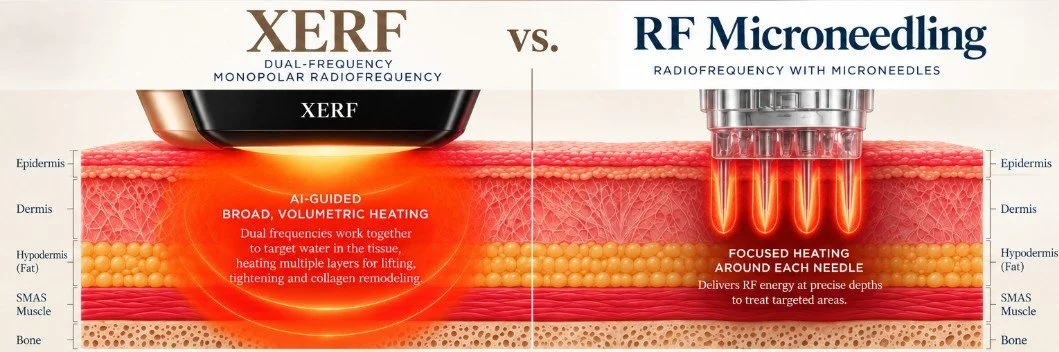
XERF vs. RF Microneedling
XERF and RF microneedling both use radiofrequency energy to stimulate collagen and improve the skin, but they deliver that energy very differently. XERF uses non-invasive dual-frequency monopolar radiofrequency to create broad, volumetric heating across multiple tissue layers. RF microneedling uses needles to deliver radiofrequency energy directly into the skin at controlled depths.
| Feature | XERF | RF Microneedling |
|---|---|---|
| Technology | Dual-frequency monopolar radiofrequency (6.78 MHz + 2 MHz) | Radiofrequency energy delivered through microneedles |
| How It Works | Uses broad, volumetric radiofrequency heating across multiple tissue layers to stimulate collagen remodeling, tightening and structural support. | Microneedles penetrate the skin and deliver radiofrequency energy directly into the tissue at controlled depths, creating localized zones of thermal injury around the needles. |
| Energy Target | Radiofrequency energy preferentially heats water-containing tissue. XERF delivers energy broadly without needles or penetration of the skin. | Radiofrequency energy is delivered through microneedles positioned underneath the skin, concentrating thermal energy around the needle electrodes. |
| Treatment Depth | XERF uses dual-frequency RF and treatment parameters designed to create heating at different tissue levels rather than relying on a single fixed needle depth. | Needle penetration depth can be adjusted by the provider. Available depths vary depending on the RF microneedling device being used. |
| Heating Pattern | Broad, volumetric heating across a larger volume of tissue. | More localized heating around individual microneedles at selected treatment depths. |
| Primary Benefits | Non-invasive skin tightening, improvement in skin laxity, collagen remodeling and facial contouring. | Particularly useful for improving skin texture, acne scars, enlarged pores, fine lines and collagen remodeling. |
| Needles | No needles. The treatment is performed from the surface of the skin. | Uses an array of microneedles that penetrate the skin before RF energy is delivered. |
| Numbing | No topical numbing is needed. | Topical anesthetic is required before treatment. Treatment can be painful despite topical numbing. |
| Comfort | Designed for patient comfort with integrated skin cooling during radiofrequency delivery. | Discomfort varies by device, treatment depth, energy settings and individual pain tolerance. |
| Skin Penetration | Non-invasive. The epidermis is not mechanically penetrated. | Microneedles mechanically penetrate the epidermis to deliver RF energy into the tissue. |
| Downtime | Little to no expected procedural downtime. Mild transient redness may occur. | Downtime varies by device and treatment intensity and may include redness, swelling, tenderness and pinpoint crusting or scabbing, risk of hyper-pigmentation or prolonged redness. |
| Ideal For | Patients primarily seeking non-invasive lifting, tightening and improvement of skin laxity with minimal downtime. Also improves skin texture, acnes scars, reduces pore size, and fine/wrinkles. | Patients seeking improvement in acne scars, texture, enlarged pores, fine lines and other surface-to-dermal concerns, with skin tightening as an additional benefit. |
Is XERF Better Than RF Microneedling?
XERF and RF microneedling are not interchangeable treatments. Although both use radiofrequency energy, the method of energy delivery and treatment goals are different. XERF provides non-invasive, broad volumetric heating and is particularly suited for patients whose primary concern is skin laxity and tightening. RF microneedling creates controlled mechanical and thermal injury within the skin and may be preferable when concerns such as acne scars, enlarged pores and skin texture are a priority.
In some patients, XERF and RF microneedling may be complementary rather than competing treatments. Treatment selection should be individualized according to skin condition, facial anatomy, degree of laxity, treatment goals and provider assessment.
About Dr. Kaplan at Rejuve Medspa
Dr. Kaplan has extensive experience with radiofrequency devices. She has personally performed hundreds of radiofrequency treatments since 2019, including Genius RF microneedling, Exilis Ultra 360, and her latest addition XERF. After graduating medical school, she completed a 4-year Emergency Medicine Residency training program and became board-certified as an Emergency Specialist with 20 years experience. Wanting to devote more time and attention to each patient, she transitioned to aesthetic and regenerative medicine in 2019. Dr. Kaplan operates Rejuve Medspa as a small, privately owned boutique practice focused on individualized care. She takes time to understand each patient’s goals and develops thoughtful, evidence-based treatment plans tailored to their specific needs and interests.
Structural Skin Tightening with XERF: A New Era in Non-Invasive Lifting
XERF is the world’s first multifrequency monopolar RF structural skin tightening treatment, that uses AI-guided precision to lift, firm, and rejuvenate the skin from within. Its intelligent cooling and multi-depth technology deliver powerful, comfortable, and natural-appearing results—without needles, pain, or downtime.

What is XERF and How does IT Work?
Utilizing dual monopolar radiofrequencies of 6.78 MHz and 2 MHz, XERF generates controlled thermal energy to target the superficial, mid, and deep dermal layers. This precise thermal energy activates the skin’s natural repair response, stimulating the production of fresh collagen and elastin. Over time, the treated area appears lifted and the skin becomes visibly firmer, smoother, and more refined, with softened lines and improved elasticity. The XERF system combines Wave Fit™ pulse and Advanced Integrated Cryogen Delivery cooling technology to control energy delivery while maintaining surface temperature.
Summary of Xerf benefits:
Deep structural skin tightening and increased collagen levels
Improved skin texture
Dual Radiofrequency: The XERF system delivers the world’s first multifrequency monopolar RF treatment, combining 6.78 MHz and 2 MHz frequencies to target energy precisely where it’s needed
Multiple depths: Histological analyses from multiple clinical studies confirm that the XERF system effectively delivers RF energy to the SMAS (Superficial Musculoaponeurotic System), a key tissue layer beneath the skin that supports lifting, tightening, and reducing the appearance of jowls. In vivo porcine studies demonstrate that XERF stimulates thickening and tightening of collagen bundles across multiple tissue depths, while producing a measurable upward lift of the fascia.
Artificial Intelligence: XERF uses AI technology to provide a personalized, consistent, and safe approach to skin tightening and contouring by precisely controlling radiofrequency energy delivery.
Intelligent treatment parameters: Using advanced AI, XERF precisely analyzes the skin’s depth to customize the ideal treatment depth and energy settings for every patient.
Real-time monitoring and feedback: A built-in temperature monitoring system provides instant feedback to maintain effective heating while preventing overheating or discomfort.
Smart cooling: The AI-regulated ICD system cools the skin surface in real time, protecting the epidermis and improving comfort during treatment.
Predictive performance: XERF uses a "Wave Fit™ pulse" technology that automatically adjusts the energy output based on the treatment conditions, optimizing performance.
Customizable: Depth and energy settings can be adjusted to target the skin precisely, allowing the treatment to be tailored to each individual’s unique needs.
No downtime: There is no associated redness or appearance of external skin injury so patients can immediately return to normal daily activities after the procedure.
No numbing: Integrated cooling technology ensures patient comfort, allowing the treatment to be performed without anesthesia or topical numbing.
Fast and convenient: Each session takes only about 60 minutes, depending on the area(s) treated.
Versatile: Can be used to tighten skin on face or body.
Quick results: Although true remodeling after new collagen/elastin formation takes a 3-6 months, the effects of the skin tightening are apparent immediately after the treatment. The initial tightening with wane over time and slowly build back up over the next 3-6 months.
All skin types: XERF uses radiofrequency energy, safely reaching deeper layers to stimulate collagen and elastin without affecting the surface pigment (melanocytes). While XERF is generally safe for darker skin tones, patients with melasma may experience worsening of their pigment, as their skin is sensitive to heat.
What to Expect After Your XERF Treatment:
Following your XERF session, you may notice mild redness or a gentle tightening sensation—both normal signs that the treatment is stimulating your skin. These effects are temporary and typically fade within a few hours. Unlike more invasive procedures, XERF requires no downtime, allowing you to leave with refreshed, radiant skin and resume your day right away. To support optimal results, we recommend avoiding direct sun exposure and keeping your skin hydrated with a gentle moisturizer in the days after treatment.
What Results Can I Expect From XERF?
One of the most exciting features of XERF is the immediate visual improvement, which offers an encouraging preview of your skin’s transformation. This initial effect may soften after a few days. The full effects of skin tightening and texture improvement appears around three months post-treatment, when collagen stimulation produces more noticeable, long-lasting improvements.
This combination of instant and progressive results makes the XERF journey both exciting and rewarding, with the delayed peak delivering more substantial and enduring changes in skin firmness and texture.
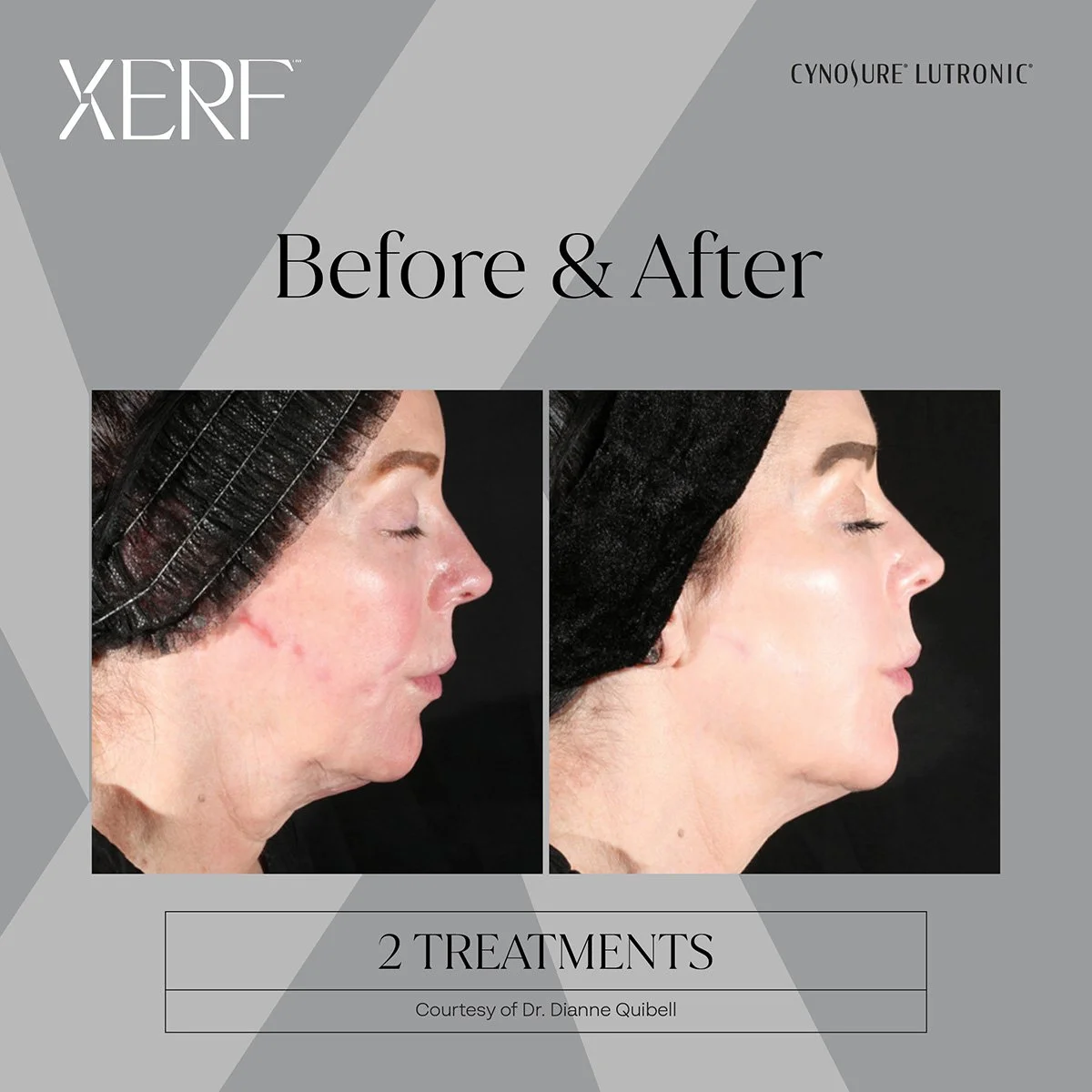
Before and After Photos:
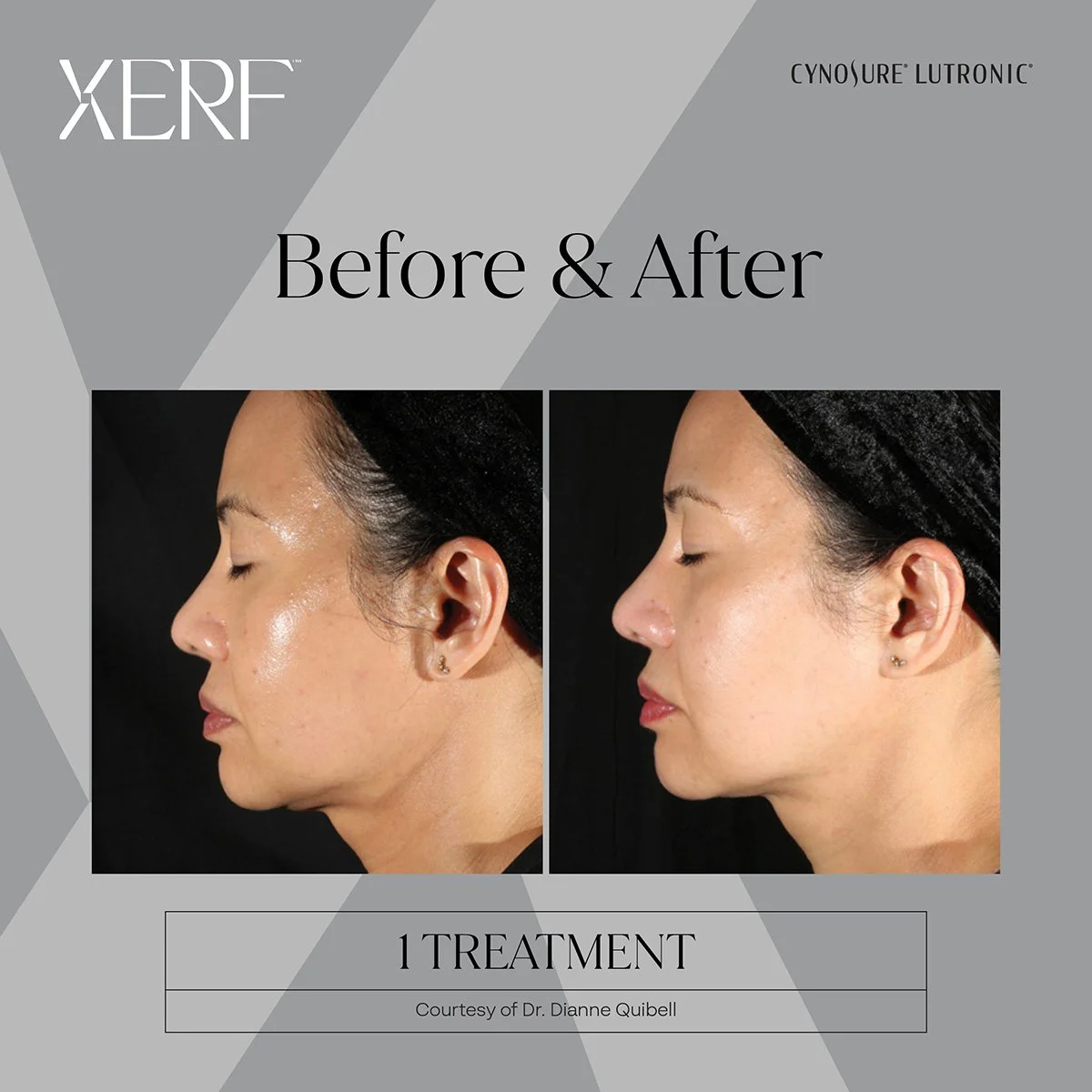
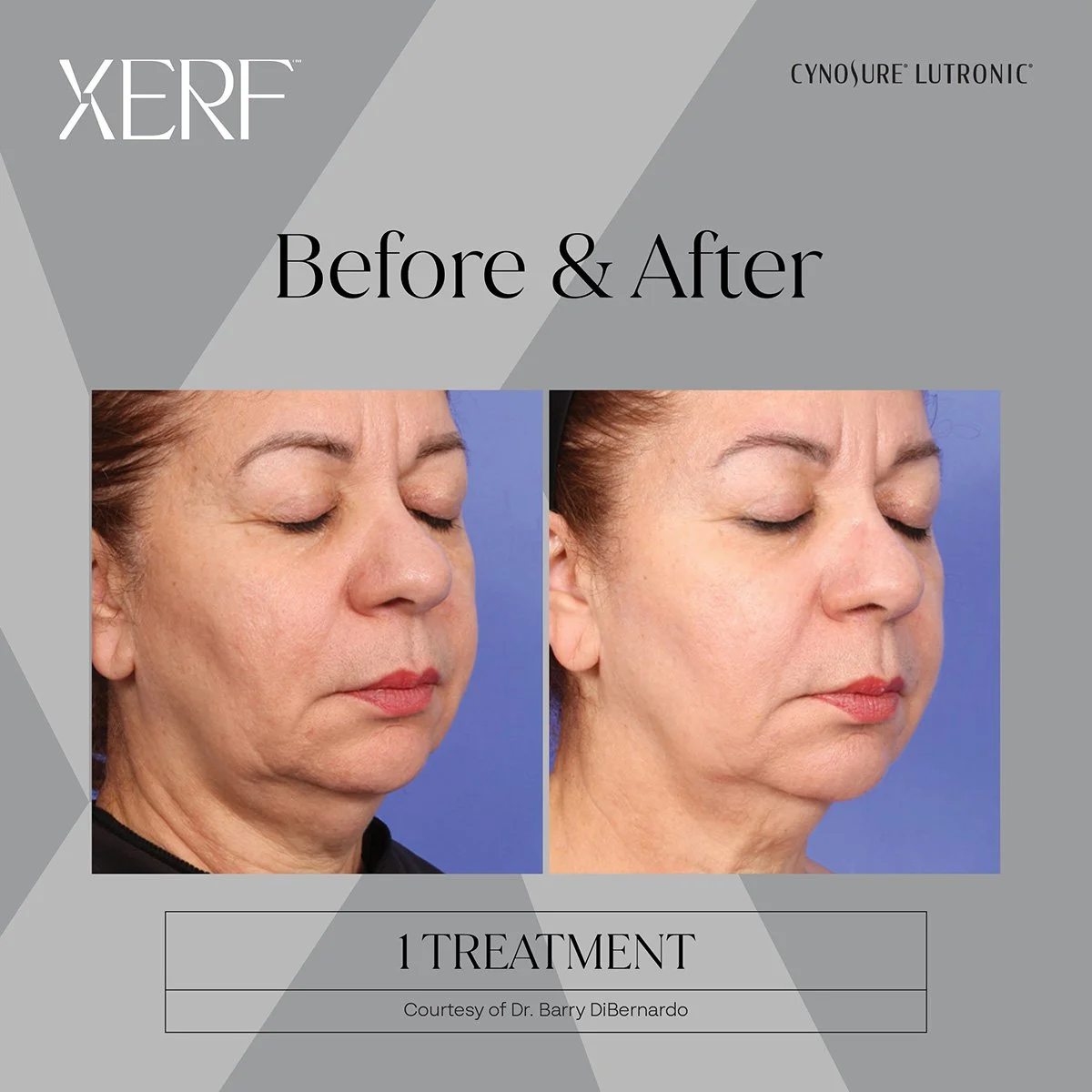
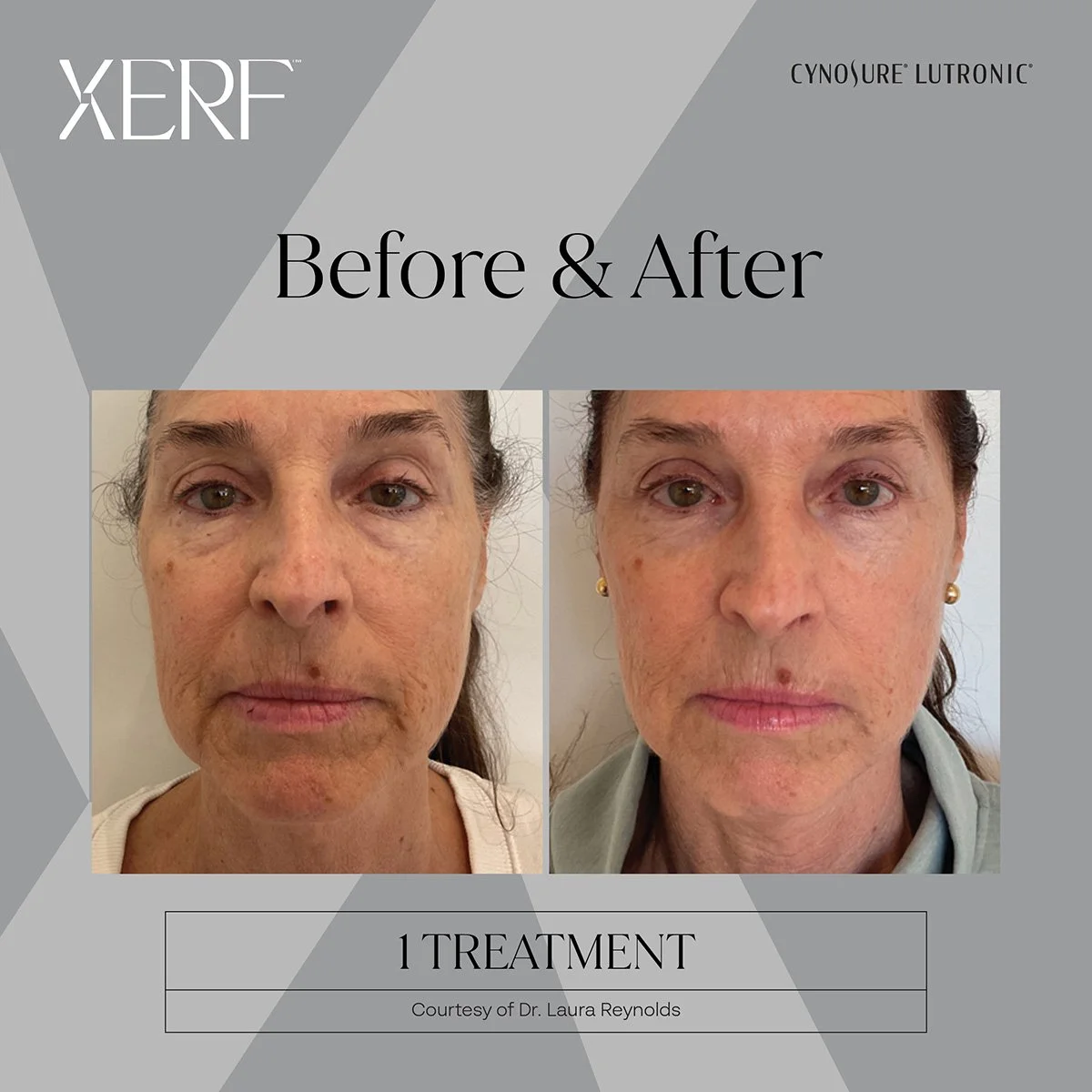
How does XERF compare to other skin tightening devices?
After nearly seven years of dedicated research and development in South Korea, XERF made its clinical debut there. Just over a year later, it received FDA clearance for use in the United States — bringing this advanced dual-frequency RF technology to a broader audience. Below is a brief summary of the nonsurgical skin tightening devices currently on the market based on their mechanism of action. The key difference with XERF compared to all the other devices is it’s depth of penetration and the amount of heat that it can comfortably transfer. No other device on the market besides XERF is able to utilize Artificial Intelligence to measure the skin's depth and accordingly set the optimal treatment depth and energy level for the individual patient.
Ultrasound: Ultherapy, Sofwave, HIFU (High Intensity Focused Ultrasound)
RF (Radiofrequency): Thermage, Ultherapy, XERF
RF Microneedling (micro needling plus radiofrequency): Genius, Potenza, Morpheus 8, Secret RF, Vivace, SylfirmX, etc.)
RF + HIFEM (High Intensity Focused Electromagnetic Energy): EMFACE
depth of treatment for various Skin tightening devices:
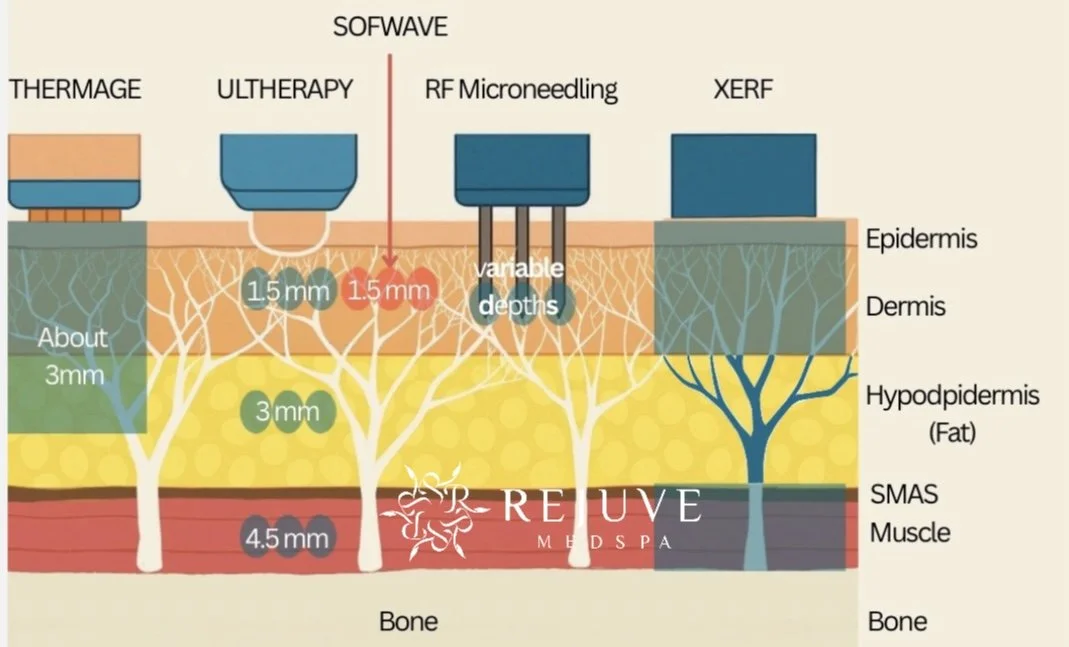
SMAS = Superficial Musculoaponeurotic System - a layer of fibrous tissue and muscle beneath the skin surface that provides structural support to the skin.
XERF vs RF Microneedling:
Radiofrequency microneedling combines the microneedling with Radiofrequency heat to treat multiple depths of the skin to induce collagen and elastin formation. RF Microneedling offers customizable depth settings for surface level concerns, but doesn't penetrate as deeply as XERF to provide the same level of structural tightening. RF microneedling requires topical numbing and can be painful. Different RF microneedling devices have advantages and disadvantages, but that is a topic for discussion on it’s own. There is downtime associated with RF microneedling such as redness, swelling, risks of hyperpigmentation; whereas ZERF is more comfortable and has no associated downtime. With the added topical numbing required, RF microneedling sessions can take longer to perform. RF microneedling delivers energy more precisely to the deeper layers of the skin, while XERF works through bulk heating to treat broader tissue areas. Although XERF can help refine pores and improve the appearance of scars, RF microneedling may offer more targeted results for these specific concerns.
XERF vs Thermage:
Thermage is an older RF technology that uses a single 6.78 MHz frequency to stimulate collagen, primarily targeting skin layers by using pulsed RF energy with fixed cooling cycles and manual impedance monitoring. In contrast, the XERF system is the world’s first multifrequency monopolar RF treatment, combining 6.78 MHz and 2 MHz to reach multiple depths of the skin—surface, mid, and deep—for more effective results. Unlike Thermage, which can be painful and lacks customization, XERF features adjustable settings, continuous controlled RF energy with AI impedance feedback and real-time thermal monitoring, and built-in cooling - providing a safer, more comfortable, and tailored treatment.
XERF vs Exilis:
Both Exilis and Thermage use monopolar radiofrequency (RF), which delivers energy through a single electrode to create a closed-loop circuit that penetrates deeply into the dermis, but does not reach the deeper structures (SMAS level). Unlike Thermage which relies solely on Radiofrequency, Exilis is able to cool the skin for a more comfortable experience and also incorporates ultrasound to control the depth of penetration. Exilis requires multiple sessions to obtain the results of a single session of XERF. Exilis treatments are also lengthy - a full face/neck treatment could take up to 2.5 hours to perform, while XERF treatments takes 60-90 minutes. Both Exilis and XERF do not require topical numbing, and have no associated recovery time.
XERF vs Ultherapy:
Ultherapy uses micro-focused ultrasound energy to heat the tissue to a precise temperature at three specific depths. Ultherapy is difficult to perform and requires an experiences/skilled practitioner to achieve optimal result. The treatment is painful and can unintentionally cause fat loss or nerve damage. Ultrasound also heats everything in it’s path because it does not target a specific chromophore.
1.5 mm - mid dermis (skin layer)
3 mm - deep dermis (fat layer)
4.5 mm - SMAS (Superficial Musculoaponeurotic System)- A network of collagen and elastic fibers, fat, and muscle that lies underneath the skin for lifting effect.
XERF can also penetrate all three depths, but with radiofrequency - not ultrasound. Radiofrequency has the benefit of targeting water as a specific chromophore. So rather than targeting everything in its path like Ultherapy, XERF can specifically target the retaining ligaments which contains high water content while sparing fat and nerves which have low water content. While Ultherapy relies on smaller coagulation zones, XERF relies on bulk heating and can therefore have a broader effect. In addition XERF can emit more energy (higher peak temperature 55-72 degrees Celsius) without being painful because of its surface cooling technology.
XERF vs SofWave:
Sofwave delivers synchronized ultrasound energy into the mid-dermis (1.5 mm) to induce collagen and elastin formation. Although more comfortable than Ultherapy, topical numbing is still recommended for Sofwave. The results from Sofwave develop gradually over time, while XERF produces visible tightening sooner thanks to its bulk heating technology, which targets the skin’s deeper structural layers. With it’s dual monopolar radiofrequencies, XERF can treat multiple depths (surface, mid, deep, whereas Sofwave only treats at the 1.5 mm depth producing superficial skin tightening, rather than the deeper structural tightening seen with XERF.
Comparison of Energy-Based Skin Tightening & Lifting Devices
| Device | Energy Type | Target Depth / Tissue | Primary Mechanism | Fat Impact Risk | Lifting vs Tightening | Pain / Anesthesia | Downtime | Key Strengths | Key Limitations |
|---|---|---|---|---|---|---|---|---|---|
| XERF | Monopolar RF (2 MHz & 6.78 MHz) with AI-guided depth control + dynamic cooling | Shallow, mid, deep (includes retaining ligaments & SMAS) | Bulk collagen contraction + long-term neocollagenesis with controlled volumetric heating | Low when properly set | Lifting, tightening, & structural support | Mild–moderate (no numbing) | None | Precise depth control, uniform heating, strong tightening/lifting without needles, low discomfort | Newer technology; availability limited |
| RF Microneedling | RF delivered via insulated or non-insulated needles | Dermis ± superficial subcutaneous fat (needle-dependent) | Fractional thermal injury → collagen remodeling | Moderate | Primarily tightening; limited lift | Moderate–high; topical numbing required | 3–10 days | Texture improvement, acne scars, customizable depth | Invasive, risk of fat loss, hyperpigmentation, operator-dependent |
| Sofwave | Synchronous ultrasound (SUPERB™) | Mid-dermis (~1.5 mm) | Focused thermal injury stimulating collagen | Low | Tightening only | Mild–moderate | None | Safe, quick | Limited depth; does not reach SMAS |
| Ultherapy | Micro-focused ultrasound | 1.5 mm (dermis), 3.0 mm (deep dermis), 4.5 mm (SMAS) | Coagulation points → tissue contraction | Low–moderate | Lifting & tightening | Moderate–high; analgesia often needed | None | True SMAS targeting, FDA-cleared for lifting | Painful, spotty energy delivery, variable results |
| Thermage | Monopolar RF with surface cooling | Dermis → superficial fat | Bulk heating → collagen contraction | Moderate | Tightening only | Moderate | None | Well-studied, single-session treatment | Less precise, discomfort, inconsistent heating |
| Exilis | Monopolar RF + ultrasound | Dermis → superficial fat | Thermal heating + tissue stimulation | Moderate | Mild tightening | Mild | None | Body contouring, non-invasive | Limited lifting, weaker facial tightening |